Vacuum Sealing Fish and Seafood: Prep First, Then Seal
Updated October 28, 2026
Quick answer
Yes, you can vacuum seal fish and seafood, and it is one of the better ways to protect fillets, whole fish, shellfish and smoked salmon from freezer burn. The catch is preparation: fish carries more surface moisture and oil than meat, its flesh crushes easily, and bones, fins and shells puncture bags. Blot and chill the fish, protect sharp edges, and match the bag to your sealer type, and vacuum sealing fish and seafood becomes a routine job rather than a fight with a wet bag.
Table of contents14 sections · tap to expand
Key takeaways
- Fish fails at the seal more often than meat because surface moisture and oil get pulled into the seal bar, so blotting and chilling matter more than pump strength.
- A chamber vacuum sealer handles wet fillets, shellfish and marinades without the freeze-first workaround an external suction sealer needs.
- Embossed channel bags are required by external sealers, while chamber models use smooth pouches, which usually cost less per bag.
- Vacuum sealing slows oxidation and freezer burn but does not replace refrigeration or freezing; follow USDA or FDA guidance for storage.
Our pick for this
Avid Armor USV20
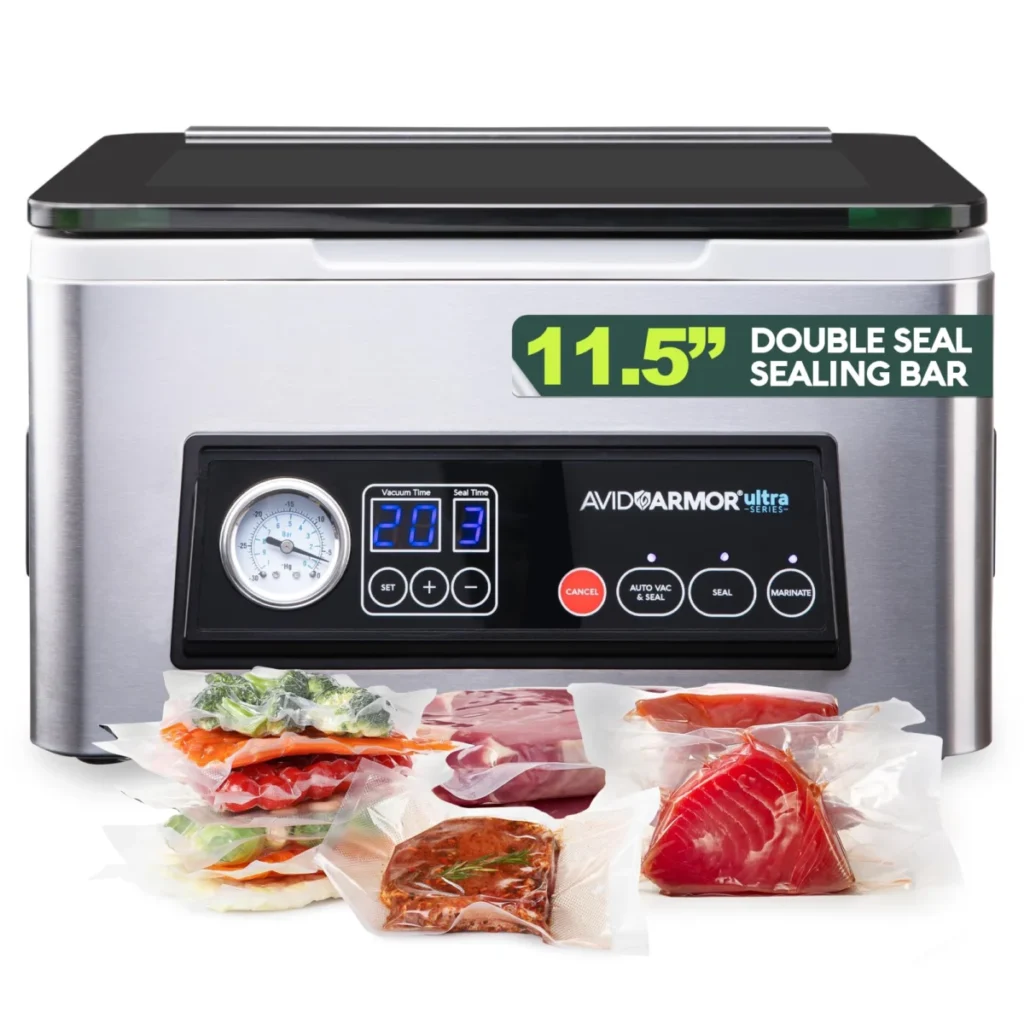
- Why we pick it: Chamber design handles liquids, adjustable vacuum time of 15 to 60 seconds protects delicate flesh, and smooth pouches up to 11×10 inches keep bag costs down
- Best for: Sealing wet fillets, shellfish and marinated seafood without pre-freezing
- Keep in mind: Heavier and pricier than an external sealer, and limited to pouches that fit its 4L chamber
As an Amazon Associate we earn from qualifying purchases. This never changes which products we recommend.
Recommended products
Products that fit this
| Product | Best for | Where to buy |
|---|---|---|
| Avid Armor USV20 | Sealing wet fillets, shellfish and marinated seafood without pre-freezing | Check price on Amazon |
| Avid Armor USV32 | High-volume fish processing plus jar sealing | Check price on Amazon |
| Avid Armor USVX | Everyday chamber sealing with gentler control on soft fillets | Check price on Amazon |
Can you vacuum seal fish and seafood?
Yes. Fish, shellfish and smoked fish all seal well when the surface is dry enough and the bag is not stretched over a sharp edge. The three limits to plan around are moisture, soft flesh and hard parts: each one causes a different failure, and each has a fix.
Moisture is the most common problem. An external suction sealer pulls air from the open end of the bag, and any liquid travelling with that air reaches the seal bar and prevents the plastic from fusing. Fish releases water quickly once it warms, so a fillet that sat on the counter for ten minutes behaves worse than one taken straight from the refrigerator.
Soft flesh is the second limit. A strong external sealer keeps pulling after the air is gone, which can compress a delicate fillet or draw it toward the bag opening. Bones, fins and shellfish shells are the third: they create pinholes that let air back in slowly, and a pinhole is often invisible until the fish shows freezer burn weeks later.
Why fish is harder to seal than meat
Fish is harder to seal than meat because its moisture sits on the surface rather than inside the muscle, and its flesh offers little resistance to pressure. Meat juices tend to stay in the cut; a fish fillet wipes wet and keeps weeping as it warms.
Oil adds a second layer of difficulty. Oily fish such as salmon, trout and tuna leave a film that can sit between the bag layers at the seal line, and oil is harder to blot away than water because it does not evaporate in the refrigerator. A double heat seal helps here, since the second wire gives the plastic a clean band to bond to even if the first pass meets a slightly slick surface.
Texture is the third difference. A fillet has no rind or bone structure to hold its shape, so a sealer that keeps drawing vacuum after the bag is tight will flatten the edges and squeeze moisture toward the seal. Gentle or manual vacuum modes exist for exactly this reason, and they matter more for fish than for a steak.
Want to skip the research? The Avid Armor USV20 is the model we would start with.
How to prep fish before vacuum sealing
Prep is where most successful fish seals are won. The goal is a cold, dry, flat portion with every sharp point covered before the bag goes near the machine.
Chilling matters as much as drying. A fillet straight from the refrigerator holds its shape and releases less moisture during the vacuum cycle than one at room temperature, and firm flesh resists crushing. For whole fish and bulky portions, a short pre-freeze firms the surface without freezing the centre.
Portion before you bag. Flat, single-layer portions seal more reliably than a stacked lump, and they thaw evenly. Leave a generous flat margin of bag above the fish so the seal bar closes on clean plastic rather than on the fillet.
- Rinse the fish briefly under cold water and pat it thoroughly dry with paper towels, including the cavity of whole fish.
- Chill the portions in the refrigerator, or pre-freeze for 20 to 30 minutes until the surface is firm but not solid.
- Cut into meal-size portions and trim loose flaps of skin or belly so the bag lies flat.
- Cover bone ends, fins and tail stubs with a folded piece of paper towel, or trim them off before bagging.
- Lay each portion flat in the bag with space between portions, and keep the sealing margin dry and free of oil.
- Seal, then check the seam for wrinkles, trapped moisture or air pockets before the bag goes into the freezer.
Chamber sealer or external sealer for fish?
A chamber vacuum sealer is the easier machine for wet fish, shellfish and marinated seafood, because it removes air from the whole chamber at once instead of drawing it through the bag opening. Liquids stay in the bag rather than travelling toward the pump, so a glistening fillet or a batch of scallops in marinade can be sealed without pre-freezing. Chamber models also use smooth pouches, which typically cost less than embossed bags.
An external suction sealer is smaller, lighter and cheaper, and it seals fish very well once the fillet is blotted and chilled. Its weakness is anything wet: soups, brines and heavy marinades get pulled toward the seal bar, and the usual workaround is to freeze the liquid or the fish surface first.
Choose a chamber sealer if you process fish often, seal shellfish or marinades, or want to stop pre-freezing portions. Choose an external sealer if you seal dry or well-blotted fillets in modest quantities and value counter space over liquid handling. A handheld sealer is a light-duty option for zipper bags and jar lids, not a substitute for either machine on raw fish.
Which bags and rolls work for fish and seafood
Bag choice follows the sealer type, not the fish. External suction sealers need embossed channel bags, which have a textured channel that lets air escape along the bag; chamber sealers use smooth chamber pouches, which have no channel because the chamber does the air removal. Using the wrong type produces a bag that will not pull vacuum at all.
Thickness matters more for fish than for many foods because of bones and shells. Thicker bags resist punctures and handle the sharp edges of fins and crab shells better than thin ones, and they are the safer choice for sous vide, where the bag sits in a water bath for an hour or more. Check that the bag is rated for the temperature you plan to cook at, and that it is freezer safe if it is going straight into the freezer.
Rolls let you cut a bag to the length of a whole fish or a long fillet, while precut bags are quicker for standard portions. Either works; the practical difference is waste and cost per bag. For a chamber sealer, confirm the pouch fits inside the chamber and under the seal bar before buying in quantity.
Smoked salmon, shellfish and whole fish: special cases
Smoked salmon is firmer and easier to seal than raw fillet, but it is not shelf stable. Cold-smoked and hot-smoked salmon still need refrigeration or freezing unless they were produced and tested as a shelf-stable product, so seal it, label it and keep it cold. Its oily surface is the main sealing risk, so blot the cut faces and use a double seal where the machine offers one.
Shellfish punctures bags. Shrimp tails, crab shell and scallop edges all create sharp points, and a pinhole lets air in slowly. Shell-on shrimp and crab keep better in a thicker bag, and a layer of paper towel around the shell reduces the chance of a puncture reaching through.
Whole fish needs the most protection. Trim or tape down fins, or wrap the fish in paper towel before bagging, and use a roll cut long enough that the tail and head are not pressed against the seal. For large fish, portioning into steaks or fillets first usually gives a better seal and easier thawing than sealing the fish whole.
Freezer, thawing and sous vide: what sealing does and does not do
Vacuum sealing removes air contact, which slows oxidation and freezer burn, but it does not sterilise food or stop spoilage. Sealed fish still needs refrigeration or freezing, and storage time varies with the species, its fat content, the temperature of your freezer and how well the bag sealed. Follow USDA or FDA guidance for freezer storage rather than relying on a fixed number.
Thawing is a food safety step, not a sealing step. Thaw sealed fish in the refrigerator, and keep it cold until you cook it. A vacuum bag is not a reason to leave fish on the counter.
For sous vide, use bags rated for the cooking temperature and keep the seal area clean so the bag does not float open. Sealing fish with a marinade is one place a chamber sealer earns its price, since the marinade stays in the pouch instead of being pulled toward the pump.
Common sealing failures and how to fix them
Most failed fish seals trace back to moisture or oil at the seam. If the bag loses vacuum within a day, look at the seal line first: a cloudy or wrinkled seam means liquid was present when the bar closed. Dry the fillet again, chill it, and reseal with a fresh section of bag.
The next causes, in order, are a wrinkled bag at the seal, an overfilled bag that holds the opening open, a bag that is not seated flat in the channel on an external sealer, and a worn gasket or seal bar. Crushed fillets usually mean the vacuum ran too long for soft flesh, so use a gentle mode or stop the cycle manually.
Replace the gasket or seal bar when cleaning no longer restores a reliable seal. On models with a user-replaceable bar, that is a cheap repair; on others, repeated failures are a sign the machine is due for service or replacement.
Which sealer and bags to buy for fish
For anyone who seals fish regularly, a chamber vacuum sealer removes the two biggest sources of failure: surface moisture and the need to pre-freeze. The Avid Armor USV20 is a chamber sealer with a 4L stainless steel chamber, an 11.5 inch heating bar and adjustable vacuum time from 15 to 60 seconds, which lets you shorten the pull on delicate fillets.
It works with smooth pouches up to 11×10 inches, so bag costs stay low, and its 17.3 lb body fits under upper cabinets. The tradeoff is that it is a chamber machine: heavier and more expensive than an external sealer, and limited to pouches that fit its chamber.
If you want jar sealing alongside fish, the Avid Armor USV32 adds an external accessory hose port for jars and a heavy-duty 11.5 inch dual-wire sealing bar for thick pouches, at 26.4 lb. The Avid Armor USVX is the lighter chamber option at 18.8 lb, with a 10 inch dual-wire seal bar, three vacuum levels and three seal settings, plus an accessory hose for mason jars. Its 10 inch seal length suits standard fillets but limits very wide portions.
Skip a chamber sealer if you seal a few dry fillets a month and counter space is tight; a well-blotted fillet in an embossed channel bag works with an external sealer. Whichever machine you choose, buy bags matched to it: smooth pouches for the chamber models above, embossed channel bags for an external sealer, and a thicker mil rating for shellfish and bone-in fish.
Avoid these
Common mistakes to avoid
- Sealing a wet or warm fillet straight from the counter. Pat the fish dry, chill it, and pre-freeze for 20 to 30 minutes if the surface is still glistening before bagging.
- Using smooth chamber pouches in an external suction sealer. Match the bag to the machine: embossed channel bags for external sealers, smooth pouches for chamber models.
- Bagging whole fish with fins and bones against the plastic. Trim or cover sharp points with paper towel, and use a longer roll so the tail and head are not pressed into the seal.
- Running a full vacuum cycle on a soft fillet. Use a gentle mode or stop the cycle manually so the flesh is not compressed toward the seal.
Useful tools
Tools that help
As an Amazon Associate we earn from qualifying purchases. This never changes which products we recommend.
Helpful tool
Avid Armor USV32
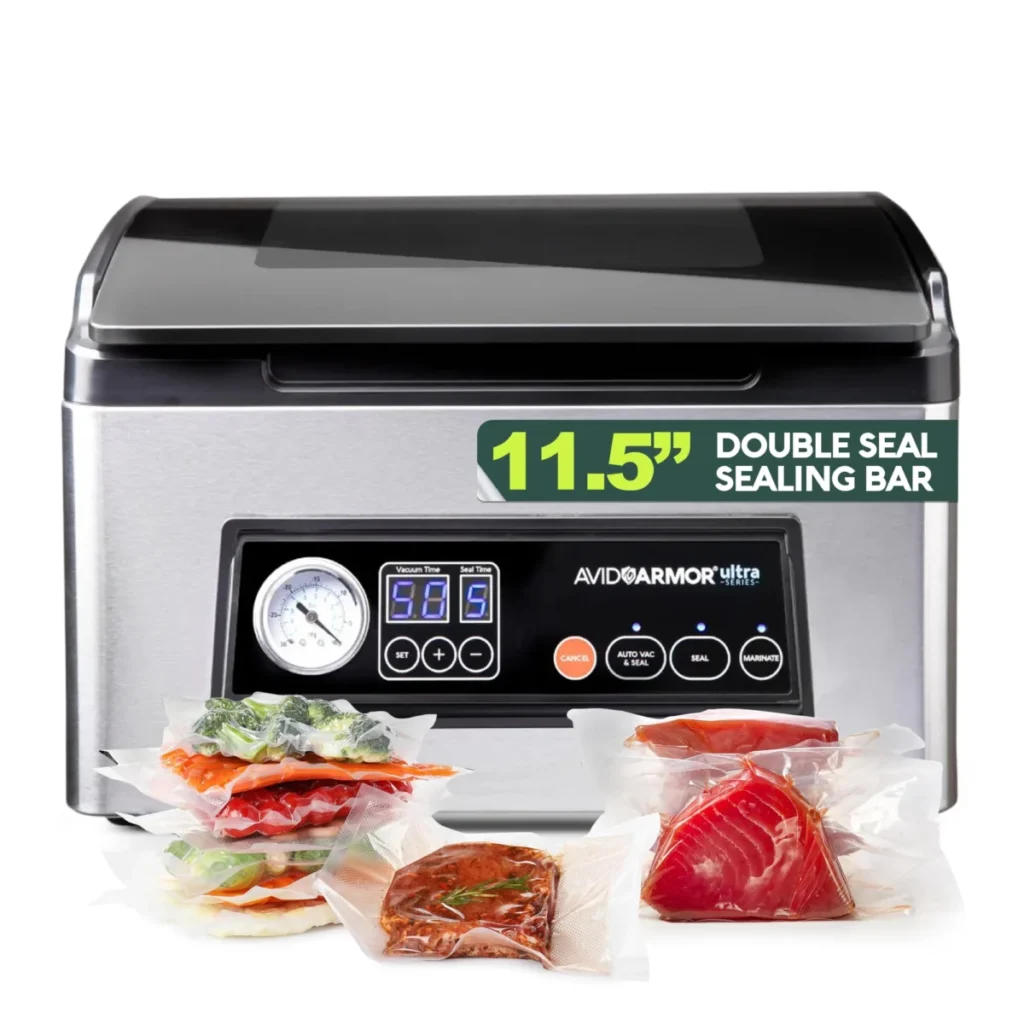
- Helps with: High-volume fish processing plus jar sealing
- Why it fits: 11.5 inch dual-wire sealing bar for thick pouches, chamber design for wet fish, and an accessory hose port for jars
- Keep in mind: At 26.4 lb it is the heaviest option here and takes more counter or storage space
Helpful tool
Avid Armor USVX
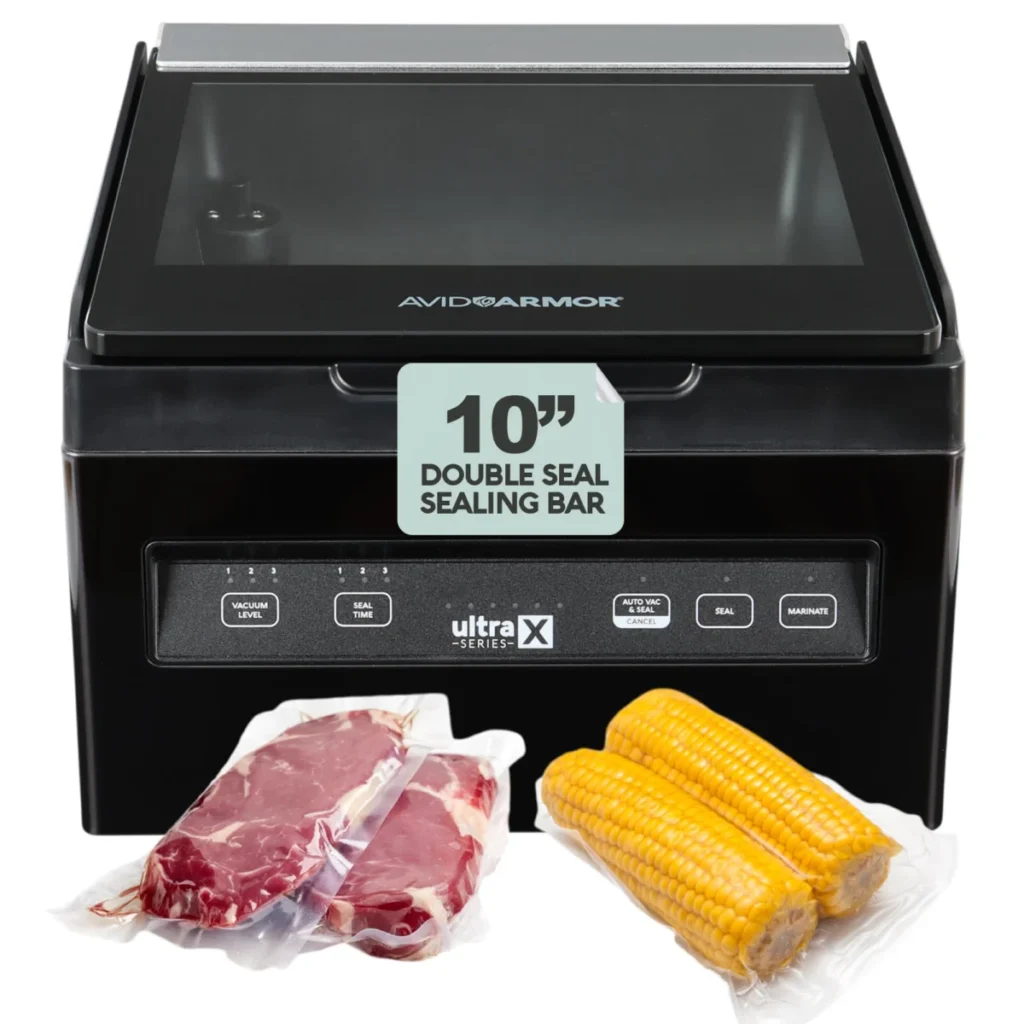
- Helps with: Everyday chamber sealing with gentler control on soft fillets
- Why it fits: Three vacuum levels and three seal settings, a 10 inch dual-wire seal bar and an accessory hose for mason jars in an 18.8 lb body
- Keep in mind: The 10 inch seal length limits very wide portions compared with the 11.5 inch bars
Common questions
Frequently asked questions
Can you vacuum seal fish without freezing it first?
Yes, provided the fillet is blotted dry and cold. Pre-freezing is a workaround for external suction sealers dealing with wet surfaces; a chamber sealer or a well-dried fillet does not require it.
Do you need a chamber sealer for wet fish and shellfish?
No, but it makes the job easier. A chamber sealer handles wet fillets, shellfish and marinades without pre-freezing, while an external sealer needs the surface dried and chilled first.
Can you vacuum seal fish with the skin and bones on?
Yes. Skin helps hold a fillet together, and bone-in portions seal fine as long as sharp bone ends and fins are trimmed or covered so they cannot puncture the bag.
Can you reuse vacuum sealer bags for fish?
Only bags designed for reuse, such as zipper-style bags, and only after thorough washing and drying. Cut-open heat-sealed bags cannot be resealed reliably and should be discarded.
Why did my vacuum sealed fish bag lose its seal?
Moisture or oil at the seam is the usual cause, followed by a wrinkle in the seal area, an overfilled bag or a worn gasket. Dry and chill the fish, reseal on a clean section of bag, and check the gasket if it keeps happening.
Is vacuum sealed fish safe to thaw in the refrigerator?
Yes, refrigerator thawing is the recommended method. Keep the sealed fish cold until you cook it, and follow USDA or FDA guidance rather than leaving it at room temperature.
Next step
Start with the Avid Armor USV20 if you seal fish often or work with shellfish and marinades, because its chamber design removes the moisture problem that causes most failed fish seals. Pair it with smooth pouches sized to its 11×10 inch limit, and blot and chill fillets before every cycle.
Keep reading
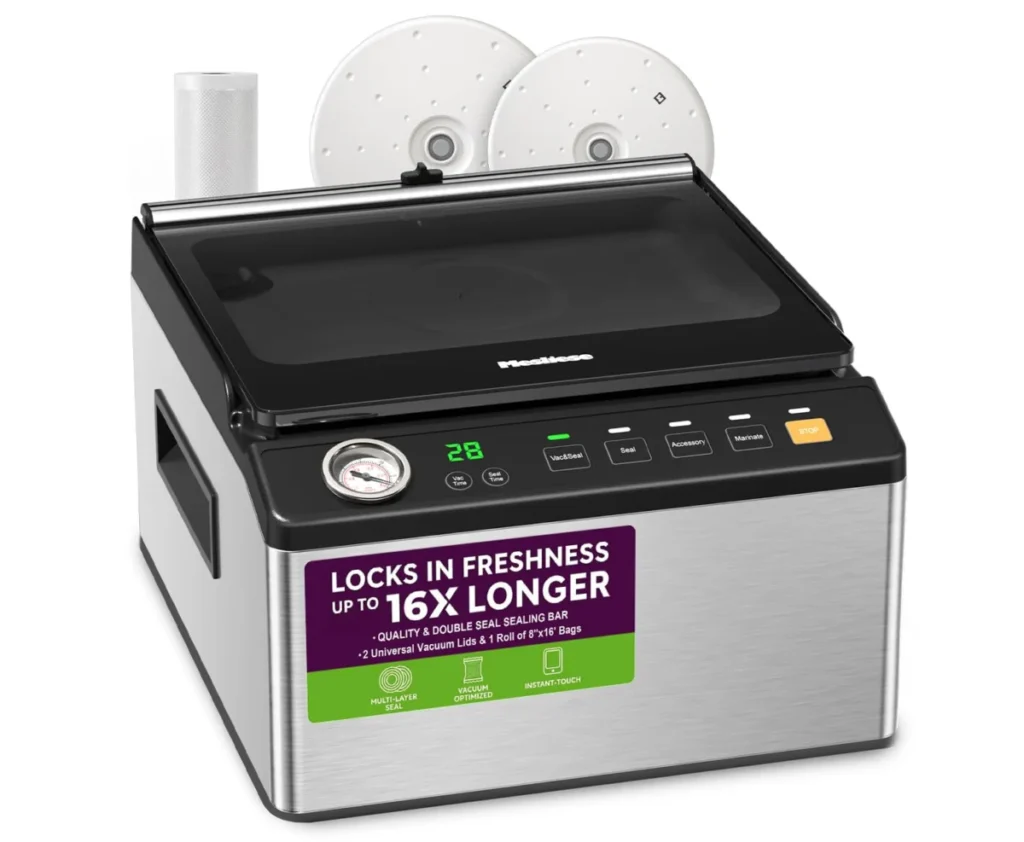
Vacuum Sealing Meat That Keeps: Moisture, Bag Thickness and Sealer Type
Pat meat dry, leave headspace and pick the right bag: a practical guide to sealing raw, wet and game meat, plus why…
Handheld Mason Jar Vacuum Sealers: Which Pump Fits Your Lids and Food
The FORJARS Jar Vacuum Sealer Set is our top pick among 7 handheld mason jar vacuum sealer, compared on sealer type and…
Avid Armor USV20 Review: A Chamber Sealer Built for Liquids, Capped at 11×10 Pouches
The Avid Armor USV20 suits frequent liquid and game sealing on a spare counter stretch. Bulk batches and wide cuts need a…